
This is the first game in the Prince of Persia series. For other games in the series see the Prince of Persia category.

| Prince of Persia | |
|---|---|
| Developer(s) | Brøderbund |
| Publisher(s) | Brøderbund |
| Year released | 1989 |
| System(s) | Apple II, Commodore Amiga, Amstrad CPC, Atari ST, DOS, FM Towns, Mac OS, Game Boy, Game Boy Color, Sega Game Gear, Sega Genesis, NES, Sega Master System, Sega CD, Sharp X68000, NEC PC-9801, SNES, TurboGrafx-CD, iOS, Wii, Nintendo 3DS, SAM Coupé |
| Followed by | Prince of Persia 2: The Shadow and the Flame |
| Series | Prince of Persia |
| Genre(s) | Platform |
|---|---|
| Modes | Single-player |


- For the Xbox 360, PlayStation 3 and iOS 3D remake, see Prince of Persia Classic.
Prince of Persia is a platform game, originally developed by Jordan Mechner in 1989 for the Apple II, that was widely seen as a great leap forward in the quality of animation seen in computer games. Mechner used a process called rotoscoping, in which he studied many hours of film of his younger brother David running and jumping in white clothes, to ensure that all the movements looked just right. Also unusual was the method of combat: protagonist and enemies fought with swords, not projectile weapons, as was the case in most contemporary games. Mechner has said that when he started programming, the first ten minutes of Raiders of the Lost Ark had been one of the main inspirations for the character's acrobatic responses in a dangerous environment.
After the original release on the Apple II, Prince of Persia was ported to a wide range of platforms. The game managed to surprise and captivate the player despite being at first glance, repetitive. This was achieved by interspersing intelligent puzzles and deadly traps all along the path the Prince had to take to complete the game—all this packaged in fluid, life-like motion.
-
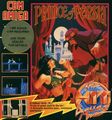
Commodore Amiga cover art.
-
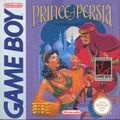
Nintendo Game Boy cover art.
-
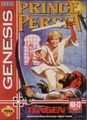
Sega Genesis cover art.
-
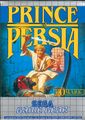
Sega Game Gear cover art.
-
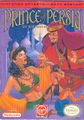
NES cover art.
-
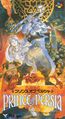
Super Famicom cover art.
-
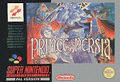
European SNES cover art.
-
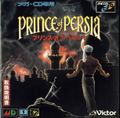
Mega CD cover art.
-
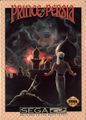
Sega CD cover art.


